Saturday, 21 February 2015

Mozambique Blog 3

Gordon and Elaine Brown reflect on another sabbatical week in Maputo

Things hotting up, no not weather, but activities. Weather reached peak of 38 degrees Saturday, only to be broken by a cracker of a storm. Fortunately we returned to hotel just as first large drops were falling as there was then three hours of torrential rain, thunder & lightning which cooled things for Sunday when we were off to worship in Liberdade, a town around 15km from Maputo, after our 7am English service locally.

So to our activities. English classes making progress. Walking around the compound gives opportunities for brief conversations, greetings and questions. We give the occasional 'lesson' in local cake shop. As Theological School for lay people opened new session this week, the compound is being spruced up and the grass cut. We are guest speakers, sharing our pilgrimages to the Holy Land, Mt Sinai and the seven churches of Asia. Students very keen to learn more of their faith and the bible so to increase their confidence in helping to lead their churches. Classes run every evening after work, 5:30-7:30.

Schools open too, bright new yellow buses increasing traffic on roads. We've had to negotiate some very haphazard parking as we wandered around visiting museums, parks and Post Office.
We also had a very interesting meeting with members of the Bible Society office and saw their depot and shop, and this weekend we're off to Xai-Xai. We will worship with two local congregations there and have the invitation to preach.

Afterwards hoping to get to the beach!

Saturday, 14 February 2015

Mozambique Blog 2

Worship in Mozambique

Gordon and Elaine Brown reflect on the second week of their sabbatical journey

Our first Mozambican worship experience, the introduction and welcome of Pastor Ernesto Langa and family to his new congregation, was a mix of formal statements, a serious charge and the friendly banter of greetings to which we were invited to contribute.

Instructed to join the processing Presbytery dignitaries, we were led to the dais and seated on either side of our interpreter. Singing seemed to start unannounced from different parts of the church and was taken up all round, unaccompanied and without two people starting different songs. It was tantalising to hear a familiar tune yet find our familiar words deserted us as words in the local Ronga language or Portuguese were sung. Hymn books were solfa style and even though many people had no book, they were singing in harmony, the women often ululating to express joy. The men showed their joy in exuberant dancing. 

More dancing as members were called out by zone or elder's group to bring their tithes, it being first Sunday of month. Visitors were also invited to participate with offerings, and dance, but we had no local currency at the time. I'd have had two opportunities as all who'd had a January birthday were congratulated, on giving another donation!

Various choirs performed. The Women's group, dressed in their uniform for this special service, pulled Argentina, Ernesto's wife into their midst in welcome.
Worship over, we processed out and lined up to shake hands with congregation.


Worship at the retreat felt more intimate as the common purpose was the focus, but there was still singing with gusto, led by one Presbytery President thumping the beat on a leather-covered Bible.  


Attending Saturday's wedding was a different worship experience. Once more placed up front, we had only photographers between us and the proceedings. Bride and groom, very solemn, were from two different denominations, so choir and congregation were vying to sing, and seeking to find a hymn known to all. Pastor Marcus smoothed things by engaging everyone in repartee as he gave his sermon, then led the dancing as he signed the register.

Smiles all round however once the certificate and couple were photographed. Two elderly elders took over and directed presentation of gifts to the bride, efficiently whisked from her and displayed while the giver made a speech dispensing advice. A length of traditional cloth, symbolically wrapped the two together before gift-wrapped boxes, pans, and crockery appeared. Then, through a side door was carried a double bed, mattress and bed linen. Both sides swarmed to dress the bed and the couple were seated on it for more photographs. Pastor Marcus played the Wedding March on a portable keyboard and we slipped out, leaving the party to their wedding breakfast.


Sunday's services were no less musical. We walked to the Synod compound for 7am worship in English, led by a young woman elder reading the set liturgy, each part followed by a relevant hymn. People were invited to contribute news, prayer or song, one child took the offering and said the prayer of dedication, another played a saxophone then we were invited to give greetings before Gordon preached. After-worship breakfast arrangements had fallen through but gave opportunity to chat with those present.

Elaine preaching, with her interpreter, Estrela
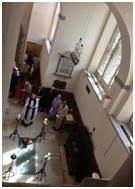
Later we were driven to a church in the suburbs where it was my turn to preach, a translator by my side. The Sunday school came to remind families of the new session commencing and to bring their children. They gave an enthusiastic example of their songs, and dancing of course, and welcomed the new Youth Worker. Later one young girl stole the show by marching confidently to stand before the congregation to thank everyone for "being like Father and Mother to me, teaching me about God". She was a hard act to follow but the choirs gave it their best.

We were instructed in moving to the rhythm of the hymns and had the chance to show what we'd learned as the offerings were taken up. And there was more dancing as we lined up to shake hands. Altogether a joy-filled time of worship.

Office prayers again was an intimate time of sharing both the synod's vision and personal needs. What will next Sunday bring? 

Saturday, 7 February 2015

Mozambique Blog 1

Gateshead ministers Gordon and Elaine Brown are spending the second leg of their sabbatical in Mozambique, as guests of our partner church, the Presbyterian Church of Mozambique.
This is the first of their reports back, written at the end of their first week.


Monday, 3rd February.            
Arrived Saturday Night, day and half late after delayed flight. Sunday went to special service to welcome Pastor Ernesto Langa into a new parish. Lots of visitors, Synod dignitaries, family and people from his previous parish swelled the congregation. And swelled the singing! A wonderful, rousing beginning to our visit.

Today is a Public Holiday so we rest, then some sight-seeing...


Friday, 6th February.            
Returned last night from taking part in opening sessions of an annual Ministers'  Retreat; a 5-day period of reunion, rest and reflection at the start of the year, held in a village, Magude, some two hours drive from Maputo. This year, the new President of Synod, Revd  Obede Baloi, elected in November 2014, has chosen to focus on formulating a 5-year plan, seeking to discern the new things God wants of the Church.


The outward journey gave an opportunity to see some of the countryside, crops and way of life. We are reminded of our previous years in West Africa; so much familiar though different; Mozambique is not Nigeria and there are definite Southern European touches from past colonial influence. One similarity is African time, for which much patience and good humour is required.

Arriving under the awning to shield everyone from the fierce sun, we experienced a baptism of fire as having met and memorised names of a small number of synod staff, we were suddenly surrounded by pastors, spouses, youth workers and evangelists from parishes around the country. Sadly, many were unable to travel as a result of severe flooding in the centre and north of Mozambique. After lunch, introductions, and some hesitant conversation as our Portuguese took a steep learning curve, we proceeded to opening worship in the church. It was led by Revd Rosa Zavala who had visited Northern Synod On a ministerial exchange with Meg Robb.

We were introduced and invited to speak of our ministry and of the challenges to the church in our URC Northern Synod.  Then everyone moved outside, gathering round under the shade of large trees and fired questions at us - the pastor interpreting had a busy time - but it was a relaxed and friendly time of sharing. Later, after dinner, we travelled along an unlit road to our accommodation, looking up at stars of the Southern Hemisphere. Our night's sleep was only a little disturbed by a violent but mercifully short thunderstorm.

Next day we were immersed in lively group debate after bible study on the passage selected for the theme, Revelation 21:1-5. Groups of 15-20 discussed set questions before a time of feedback then it was time for lunch and for us to return to the capital. 


The homeward journey took somewhat longer as we were accompanied by the treasurer who had some shopping to do for the next days' s meals, which meant we had a tour of the many markets around Maputo and a demonstration of her bargaining skills. 

Monday, 13 October 2014

Fighting Ebola

Ray Anglesea shared this reflection with the congregation
of St Andrew's Dawson Street, Crook on October 12

Last Thursday, 2nd October, at a meeting at Lancaster House, London, Britain appealed for international help to contain the world’s worst outbreak of the Ebola virus which is now spreading at the rate of five cases an hour in Sierra Leone.  Philip Hammond, the foreign secretary, was joined at Lancaster House by representatives of five African countries and ten other nations, including American and Cuba. UN organisations, charities, Idris Elba the actor, and William Pooley, the British nurse who recently recovered from Ebola, were also present.

The Ebola virus has, at terrifying speed, killed almost 4,000 people. It has been sweeping across vulnerable African states with such intensity that health experts believe as many as 1.4 million people could be infected by next January 2015. The number of infections is doubling every three weeks. President Obama has already described the disease as a “threat to global security.”

It is perhaps difficult for those of us who live in a country where there are 270 doctors per 100,000 of population to imagine what it is like for those living in Sierra Leone where there are only 3 doctors for the same number trying to deal with such a highly contagious disease. It is not therefore surprising that people look for meaning where there seems to be none, and that they turn to tried and tested ideas about God’s punishment, drawing parallels with the plagues of Egypt, blaming particular social groups and claiming that only those protected by God’s hand will be “delivered.”

In the Bible there are plenty of examples of such connections being made between sickness and sin, and even amongst the generally agnostic population of this country, sudden disease or injury can make us ask why and look for reasons in our own behaviour, rehearsing our regrets about the past and bargaining with God about the future. But, although there may be times when a period of illness or some other crisis can prompt us as individuals, or even as nations, into important thinking about the meaning of our lives, and even into turning away from behaviours which do us and others no good, there is a world of difference between finding the strength to change our own ways through a shock we have received, and vulnerable groups being told by authority figures that they are sick because they are immoral or because God is angry with them.

Such pronouncements may bolster the moral certainties of those who make them, but for those unfortunate enough to fall ill in a poor country through no fault of their own, fast on the heels of the terror of being sick, comes stigmatisation, isolation and the withdrawal of all kinds of help. In the ministry of Jesus, rather than withdrawing from those who were sick or socially outcast, he was constantly crossing boundaries to reach out to people, whether they were lepers who were contagious and considered unclean or haemorrhaging women who had exhausted all their funds on doctors who could not help, or even the morally dubious by the conventions of the time. 

Those who are in the field in West Africa fighting this disease - both Christians and others - deserve our support as they contribute to the fight this disease. Save the Children at Thursday’s conference pledged £70 million of which £40 million is for work in Sierra Leone. Comic Relief has pledged £1 million whilst the UK government has put £125 million into the pot to fight Ebola, including the promise of 700 extra beds in hospital units constructed under the supervision of the military. Four hundred NHS staff have volunteered to help staff them and train local people.

To me, it is clear that if God is to be found in the Ebola outbreak, he is not in the scapegoating of particular social groups, but is alongside those who are the disease’s victims, and embodied in those brave people who take risks to help.

Ray Anglesea

Wednesday, 27 August 2014

Sabbatical Blog 12: Transfiguration

Ray Anglesea shares the final installment


My 12th and last blog. It has been an amazing and wonderful sabbatical. Ki and I have travelled over 20,000 miles and have been away from home for 7 of the 12 weeks. Highlights of the summer have included my granddaughter’s baptism, singing on Broadway, Carnegie Hall and the Great Cathedral Church of St John the Divine, New York, observing beavers in Lake Manatoulin, Ontario, eating maple and walnut ice-cream in downtown Toronto, meeting Russ Thomas, a visit to The Mary Rose, as well having wonderful family meals in the sizzling hot sunshine of Bordeaux. And all this in the context of a remarkable hot summer which embraced The World Cup, the Yorkshire Tour de France, Wimbledon, The Commonwealth Games and the rise of the very talented golfer Rory McIIroy.

I am writing this blog two days after the nation observed the commemorations of the start of the 1st World War. The 6th August is one of my favourite feast days in the church’s year, the Feast of the Transfiguration. It is a story and picture that brings me back home, to Durham and Tom Denny’s beautiful and startling stained glass window of The Transfiguration in the Cathedral. But alas, the feast day also shares another anniversary, the Enola Gay over Hiroshima. A cloud of dazzling light. The transfiguring in a weapon of mass destruction.

The strange story of the transfiguration reveals a dazzling light, but yet a cloud; there is revelation yet things are hidden; a voice, but we do not know what was truly heard. All very ambiguous – the revealed remains hidden, the extraordinary appears in the ordinary, and like Elijah’s experience, God reveals himself in the silence. The transfiguration story ends when Peter speaks; the end of silence breaks the spell.

As I gather up my final reflection through the thoughts of the blogs I have written for the community at Crook, family and friends, listening has been one of my goals of the summer, listening for God for perhaps a new direction as I start my retirement years, listening on the white sun-kissed Bordeaux beaches, listening in the forest wilderness of Northern Ontario, listening in French chantry chapels. In the words of the famous song we learn to listen to “the sound of silence.” Deep prayer is founded on the discipline of deep listening. As I think of the new building project soon to get underway at Jesmond URC, Newcastle I wonder whether it was really Peter’s intention to interrupt the spectacular and awesome vision of the Transfiguration with a building project – “let us build three booths?” Typical, you might think. To every epiphany or revelation there is someone on hand to turn into a religion. This suggestion is rejected by Jesus – it shows a remarkable lack of understanding by Peter. “Let me enshrine the experience,” says Peter, “let us make a memorial, let me speak, let me build!” But Peter is required to do only one thing: watch and say nothing. Listen. It is interesting, isn’t it, that the moment Peter speaks, “a cloud overshadowed them.” And then Peter spoke only because he didn’t know what to say. The story of the transfiguration is about learning to live with the cloud and the light, and learning that the voice of God comes in quiet ways.

In the stillness and restraint of the sabbatical and with the overall thoughts of these 12 blogs marinating in the background of my mind can I detect the stirrings of God – as I wait so am I directed?   With the first letter of my Christian name in mind here are three “Rs” which as a result of the experiences of this sabbatical I hope will direct my ministry in my retirement years.

First, Relax. Blog 4 again. I am not indispensable! As I think about returning to ministry in a country and a local pastorate where the vast majority of the population continue to affirm their belief in God and then proceed to do very little about it, I have observed there is still a demand for religion that is public, performative and pastoral and that there are thousands of private spiritualities and beliefs that flourish, demonstrating that faith as statistics may reveal otherwise, does not wither and die in our culture. Rather religion mutates and lives on. So churches need to take advantage of this trend, to be open to the world and not closed to it. And in this regard the sacrament of baptism in my local situation must be offered as publicly and freely as possible, the answer to indifference is not restriction; baptism is a point of entry for the church, not the culmination of an education.

Second, Resilience. I believe that the Christian faith is remarkably resilient in the modern age, religion is still in demand. And again the church at the local level must continue to engage with the community offering shape, colour and articulation to the gospel stories. In an age of wars of religion, where religion is turning into the new global politics the church must be there provide comfort, understanding and support to the confused and bewildered.

Thirdly, Respond. The church it seems to me as I think of my local church can respond to the challenge of an apparently faithless age with a confidence in a society that refuses to leave religion alone. We continue to offer a ministry and a faith to a public that wish to relate to religion without necessarily belonging to it. And of course with rare exceptions this is what ministers have had to work with most of the time; it is both an opportunity and a challenge.

So there we have it. Some thoughts then for the future – relax; have faith in the resilience of God and his church; but also respond to the many tests of faith that dominate every age. But above all keep listening in prayer to the whispers of God in the quietness of your soul.

Ray Anglesea
Sabbatical Blog 12: Transfiguration
August 2014


Monday, 25 August 2014

Sabbatical Blog 11: The Mary Rose

Ray Anglesea shares the next installment of his sabbatical experiences

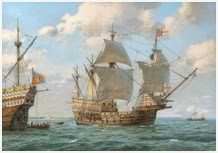
One of the joys of spending a long weekend with dear friends in Portsmouth was a visit to see The Mary Rose; one of Henry VIII’s great ships, now housed in the new Mary Rose Museum located just metres way from Nelson's flagship, HMS Victory and the ships of the modern Royal Navy.

Sometime in the late afternoon on July 19th 1545, the Mary Rose heeled to starboard and sank whilst engaging a French invasion fleet larger than the Spanish Armada 43 years later. Centuries later the Tudor ship captured the world's imagination when she was raised from the seabed in 1982; the Flagship is the only sixteenth century warship on display anywhere in the world. The excavation and salvage of the Mary Rose was a milestone in the field of maritime archaeology. The surviving section of the ship and 19,000 thousand recovered artifacts are of immeasurable value as a Tudor-era time capsule. 

As fascinating as Henry VIII’s naval war machine was the building in which she is housed in is of considerable architectural interest too. The £27million museum opened in 2012, an elliptical timber-clad building designed by London office Wilkinson Eyre Architects and built over a late18th Century Dry Dock listed as a Scheduled Ancient Monument. It was designed with a stained black exterior, intended to reference traditional English boat sheds of the time, and a disc-shaped metal roof that curves up over its elliptical body.

The new boat-shaped Museum showcases the very best of 21st century architecture and construction, where for the first time visitors can see the starboard section of the ship's hull with its preserving sprays switched off and the final phase of the hull's conservation through internal windows in 3 different stories. The interiors were designed to recreate the dark and claustrophobic atmosphere found below a ship's deck. Spaces feature low ceilings and are kept deliberately dark, with lighting directed only onto exhibits and handrails so that visitors can find their way through the galleries.

Following the painstaking archaeological excavation and recording of the exact location of every find, the project team reunited the original contents - fittings, weaponry, armament and possessions – deck-by-deck. A virtual hull was constructed to represent the missing port side with all the guns on their original gun carriages, cannonballs, gun furniture, stores, chests, rope and rigging. Visitors to the Museum walk in between the conserved starboard section of the hull and the virtual hull on three levels, seeing all the main shipboard material in context as though they are on board the Mary Rose.

The end galleries interpret the context gallery deck-by-deck in more conventional museum display cases.  In them are to be found the most comprehensive collection of Tudor artefacts in the world from personal belongings such as wooden bowls, leather shoes, musical instruments and nit combs complete with 500 year old lice to ship's objects such as longbows and two tonne guns. For the first time, using forensic science, crew members have been brought to life giving visitors the chance to come face-face with the carpenter, cook, archer and even the ship's dog, 'Hatch'!  The complete conservation of the Mary Rose will be finished in 2016, when she will be fully integrated with the new museum environment.

As I walked around this fascinating museum a verse from St. Luke’s gospel came to my mind “For there is nothing hidden that will not be disclosed, and nothing concealed that will not be known or brought out into the open.” Chapter 8 and v17.  The Tudor warship that long lay buried in the silts of the Solent has revealed its secrets. For some the idea of disturbing and investigating a maritime grave might appear distasteful - involving huge risks. To uncover what has been carefully concealed, to exhume what time and forgetting has claimed for its own is to risk bringing to light truths that could comprehensively shatter the peace of the day. The exhumations of human remains are complex archaeological issues. An engraved slab of Welsh slate in Portsmouth Cathedral marks the resting place of an unknown member of the ship’s company, who was interred with respect and dignity and one of the 500 who perished when the ship went down. Every year, on the Sunday before the anniversary of the sinking of the Mary Rose, an act of remembrance including the laying of a wreath is held at the Mary Rose grave.

Whatever the ethics of archaeological investigations out of the Solent’s silent world has come some of the treasures of the Tudor world, the leather shoe, a rosary bead, long bows, bottles, coins and part of the doomed ship itself. The memory of the crew of the Mary Rose has also been brought back to life every time a person views or holds the small treasures that the divers had salvaged. The happenings of that past day in 1545 are now laid bare in a beautiful and inspiring naval museum. Today we re-enter relationships with what has been buried.

The artefacts that are recovered, and the stories that go with them, are memorials to the souls of the dead. In effect, each artefact, becomes a meaningful memorial, a testimony to the reality of the lives of those who sailed aboard the historic ship, the Mary Rose.

Ray Anglesea
Sabbatical Blog 11: The Mary Rose, Portsmouth.
June 2014

Sunday, 24 August 2014

Sabbatical Blog 10: Le Pain

Ray Anglesea shares the next installment of his sabbatical experiences

One of the joys of holidaying in France is the early morning walk, to the boulangierie, the bread shop to collect baguettes - a wand or baton of long crusty bread, made from wheat flour, water, yeast, and common salt.  As part of the traditional continental breakfast in France, slices of baguette are spread with butter and jam and dunked in bowls of coffee or hot chocolate. Delicious!

Although baguettes are closely connected to France they are today made around the world. In France, not all long loaves are baguettes; for example, a short, almost rugby ball shaped loaf is a batard (literally, bastard), or a "torpedo loaf" in English.  Another tubular shaped loaf is known as a flute. Flûtes closely resemble baguettes and weigh more or less than these, depending on the region. A thinner loaf is called a ficelle (string). A short baguette is sometimes known as a baton (stick), or even referred to using the English translation French stick.  

                       
At the boulangerie I also buy croissants; buttery flaky viennoiserie pastry named for its well-known crescent  shape. Croissants and other viennoiserie are made of a layered yeast yeast-leavened dough. The dough is layered with butter, rolled and folded several times in succession, then rolled into a sheet, in a technique called laminating. The process results in a layered, flaky texture, similar to a puff pastry. Crescent-shaped food breads have been made since the Middle Ages, and crescent-shaped cakes possibly since antiquity.

The morning lectionary readings around the pool on Sunday 27 July (7th Sunday after Pentecost) were the many kingdom parables found in the gospel of Matthew, chapter 13:31-33, 44-52 - yeast being one of them. Jesus suggests that the Kingdom of Heaven is like yeast that is mixed in with bread. It is what makes the wine and beer, it makes the dough to rise to make the bread. It is the tiny insignificant catalyst for our basic commodities and the formation of our communities; it is the leaven in the lump; the difference between bread and dough; juice and wine, refreshment and celebration. Yeast is the ingredient that turns the passive into active; the flat into flavoursome; the ordinary into the extraordinary.

When Jesus talks about the Kingdom of God as yeast – and our ministers too – he is not advocating the concentrate in a jar: yeast for the sake of yeast. No, in Jesus imagination, we are invited to get lost. To loose ourselves into something bigger. But not pointlessly. Rather, in “dying” to our context, we activate it. We become the catalyst that brings flavour, strength, depth, potency and growth. Without yeast, there is no loaf, just dough. Literally we die to ourselves for growth: we are what makes bread for the world.

John Paul Lederach, Professor of International Peace building at the University of Notre Dame, Indiana, offers a rich meditation on our calling to be yeast. Consider this. The most common ingredients for making bread are water, flour, salt, sugar and yeast. Of these, yeast is the smallest in quantity, but the only one that makes a substantial change to all the other ingredients. Lederach says you only need a few people to change a lot of things. Quality changes quantity. Size does not matter very much. It is quality that counts, not quantity. Small things then make a difference. Tiny spores of yeast change the mass. So yeast, to be useful needs to move from its incubation and be mixed into the process – out of the church buildings into ever day life.  Yeast reminds us that God can do some very promising things with the apparently negligible. This is where God sees potential and hope.

We can be the yeast that is kneaded in to make the bread, that we may all become one. But we must let God set the pace, the bread rises in time; the wine matures only when it is ready.

A few years ago I was privileged to visit Somewhere Else, the Liverpool Bread Church to meet the founder of the project, the Revd Dr Barbara Glasson, a Methodist minister. Somewhere Else in Liverpool's City Centre is a response to the belief that there is a life-giving message in this gospel story. The “church” gathers as a faith community around the making and sharing of bread. While the bread was rising, the conversation would turn to the important issues of life, shared in the warm kitchen. People would read from the Bible, pray for one another. They became companions (= cum panis, with bread). Bread reaches across cultural and social divides enabling those who knead and shape it to explore their experience. A constant flow of visitors to this community has ensured that ripples from the 'bread church" are reaching ever further and wider, locally, nationally and internationally. All are encouraged to bake two loaves: one for themselves and one to share as they feel led. Dr Gleeson stated:
“Making bread has taught us so much – the process of baking mirrors so much in life: the pummelling and proving is about how we engage with one another, the waiting for the dough to rise is about how we give each other time. Churches generally are a bit obsessed with numbers and outcomes. But the bread makes us wait … it needs to rest, to rise. In the waiting time the smell of the bread triggers memories and facilitates story so that people quite naturally talk to each other. And every loaf we make is different. Bread is a sign to the world.
Ray Anglesea
Sabbatical Blog 10: Le Pain, France 
August 2014


Monday, 18 August 2014

Sabbatical Blog 9: Cathédrale St-Julien du Mans, 4th August 2014

Ray Anglesea shares the next installment of his sabbatical experiences


Le Mans Cathedral (Cathédrale St-Julien du Mans) is a Catholic cathedral situated in Le Mans, France. It is dedicated to St Julian of Le Mans the city's first bishop who established Christianity in the area around the beginning of the 4th century. The cathedral, which combines a Romanesque nave and a High Gothic choir, is notable for its rich collection of mediaeval stained glass and the spectacular bifurcating flying buttresses at its eastern end.

Amongst the great beauty of the cathedral one wall plaque caught my eye in the south transept, a war memorial dedicated to the “memory of one million war dead of the British Empire who fell in the Great War 1914 -1918, and of whom the greater part rest in France.”

The Great War memorials in every town and village both at home and in Europe bring it starkly home to us. The First World War was a huge collective bereavement. The Blood Swept Lands and Seas of Red - an art installation of 888,246 ceramic poppies - one poppy for each British and Colonial death during the conflict and planted in the dry moat at the Tower of London is a visual reminder of the enormity of that loss. The generation that lived through the War was a generation both literally depleted by mass slaughter and depleted or diminished in another way by the loss of so much confidence and aspiration. All around were the signs of absent contemporaries; and for many the continuing trauma of having seen friends butchered hideously in large numbers in front of their eyes. There were absent sons and daughters, parents, brother and sisters, husbands and wives, lovers, colleagues, neighbours: a routine intensity of loss.


But beyond that, many believed that the greatest loss in the war was the conviction of human purpose and human meaning. The brilliant golden glow of an innocent Edwardian autumn about which so much has been written and imagined gave way to four cruel, calamitous and merciless years. An automatic belief in national righteousness; the extreme pronouncements of a belligerent deity espoused by Anglican Bishops and German Lutherans; governmental wisdom; the trustworthiness of official communication and popular media alike – all these were shaken beyond repair. The generation that discovered this had to find their way into the twentieth century with maps and landmarks damaged almost unrecognisably. 
For many who actually lived through the nightmares of the First War the war shattered so many illusions of those who suffered in the trenches and further afield, as well as on the Home Front. Many could make no sense of God in the cataclysmic events that unfurled before them. For others who tried to make sense of where God had been in all this realised that losing the safe, problem-solving God who protected nations and empires might itself be a gift, a moment of truth that brought the reality of God closer, recognised or not.
Geoffrey Studdert-Kennedy, the charismatic military chaplain universally known as “Woodbine Willie,” was one of those who tried to make sense of it all. In his sermons, his meditations, his astonishing poems, so many of them cast in the voice of the ordinary soldier in the trenches, full of protest and apparent blasphemy, Studdart-Kennedy argues against the bland problem solving God. His commitment is to the God who is discovered in the heart of endurance and pain – not a solution, not a Father Christmas or a Fairy Godmother, but simply the one who holds our deepest self and makes it possible for us to look out on the world without loathing and despair.
Shocking and stark as it was, the way Studdart-Kennedy talked and wrote was pretty well the only religious response that was at all credible to those who were living through the daily nightmare. And this may explain just a little how some of the brave who did come through were able to find some deep foundation for surviving the rest of the century with courage and a kind of new-found faith.
That being said, and taken as a whole, the experience of war effected how people thought about God, about society, and about life. The war changed everything. Survivors were no longer the same people they were before the war. They could not think, see, feel in the same way; and they were not content with the old answers to their questions. Karl Barth (1886-1968), pastor of a rural Reformed parish in Switzerland, declared to a meeting of Religious Socialists in 1919, "The fact that today our eyes are opened wider to life's realities is the very reason why we long for something else."   A young Lutheran theologian Friedrich Gogarten (1887-1967), expressed the bitterness of his generation to his theological elders in a 1920 article, "Between the Times." He wrote:

 “In our need we were often angry with you, because you left us alone--and because your words were so weak and so empty that they sank to the ground before they reached us. But mostly we cried out our question to you through all your answers to your own questions. . . .

The clearest theological response to the religious crisis created by the war in Europe was that of Karl Barth. He was soon joined by others thinking along similar lines, his work had a profound impact on twentieth century theology and figures such as Dietrich Bonhoeffer  — who like Barth became a leader in the Confessing Church — Thomas Torrance, Paul Tillich, Reinhold Niebuhr, Stanley Hauerwas, Jurgen Moltmann and of course, Albert Schweitzer.
The War had a profound effect on how we and our European neighbours thought about matters of faith for the rest of the century. Christians struggled with questions of the impotence of the Church, the power and mystery of sin, and the ethics of institutional Christianity. In reaction to the Protestantism that endorsed the war, a distancing between Christianity and culture also took place. Questions of the ethics of war relate directly to us today, not simply to human life, but to the survival of all life on our planet. The trauma of the War in Europe initiated a deep searching for spiritual truth, which has shaped the religious history of this passing century.

Ray Anglesea
Sabbatical Blog 9: Le Mans, France 
4th August 2014


Saturday, 16 August 2014

Sabbatical Blog 8: One plus one *

Ray Anglesea shares the next installment of his sabbatical experiences

On 6 July 2014, the General Assembly of the United Reformed Church, moved forward with its discussions on the marriage of same-sex couples.

This significant issue was considered at the Assembly, including a facilitation group report which was written after Assembly (and chaired by our own Synod Moderator, Revd Lis Mullen) had heard from a wide range of speakers with varying views. On the final day, a resolution was passed which reflects the range of views expressed on the floor of General Assembly. It honours the sense of urgency expressed by those who had hoped that this Assembly would allow same-sex marriages in their churches; it honours the wish of a majority that the celebration of same-sex marriages should be a matter for local church decision; and it honours the deeply-held convictions of those members who remain deeply opposed to the marriage of same-sex couples in church. The resolution gives local churches a nine-month period of consultation to reflect, gather and report on the views of their members. It also allows the November 2014 meeting of Mission Council to call a special “one issue, one day” meeting of the General Assembly without the need to wait for the next scheduled meeting of Assembly in July 2016.

Equal marriage has now become law in England. The Marriage (Same Sex Couples) Act 2013 came into force on the 29thMarch 2014 (see previous blog, http://urc-northernsynod.blogspot.co.uk/2014_04_06_archive.html.

I don’t know what I can add further to the debate particularly after the deeply prayerful way in which the issue was debated at Assembly. But here are some thoughts from a Christian perspective as we look forward to further prayerful considerations at church meetings in the coming months.

Firstly, I think we need to be more intelligent about thinking biblically in relation to equal marriage. It’s not enough to quote biblical texts by themselves, or quote relevant or irrelevant historic clauses from the Reformed Westminster Confession of Faith (1646) as if they prove or disprove a particular view: what is necessary is to understand the direction in which scripture is leading us in the way we reflect on human relationships today. In Jesus’ world there is one thing above all else that marriage was for - it was for perpetuating the male line through the controlled production and rearing of male heirs. It is true that marriage had other social purposes as well; in a patriarchal world marriage protected a woman from isolation, vulnerability and exploitation in a society in which she couldn’t be an independent earner and property owner. And while this may appear to be to an outdated OT biblical model of marriage it is far removed from what the theology of a Christian marriage today might mean and what St Paul had in mind. Put simply - human marriages are meant to be like God’s covenant with us, his people, his church and his world. The metaphor of the marriage covenant tells us that God’s covenant love is a love "that will not let us go." A covenanted relationship is precisely how God marries himself to humanity. This I think helps us understand the purpose of God’s relationship with us, and the purpose and permanence of marital relationships. Shouldn’t the church positively welcome equal marriage as affirming this rich biblical insight into God’s nature and ours?

Secondly: Throughout the history of the church, marriage has always been a social reality that church authorities have to different degrees sought to bless, commend, encourage or control. In recent generations a number of factors have clustered together to change the context of marriage considerably. There was a time when people lived much shorter lives, and a long marriage was 20 or 25 years. There was a time when one pregnancy in five could end in the mother’s death. There was a time when sexual relations led sooner or later to the conception of children, and so sex before or outside marriage was dangerous and socially subversive. There was a time when no woman could contemplate owning property or having an independent life or career. There was a time when the household was the primary centre of economic activity and the welfare of the vulnerable. These things cemented marriages, for good or ill. Those times are largely gone in the West, and few would genuinely lament their passing. But that means the social and cultural scaffolding that used to support marriage has been more or less dismantled. Christians in every state of life – single, married, separated, divorced, married again, lay, ordained – are all struggling to come to terms with today’s reality that marriage isn’t the necessity it once was. Equal marriage is yet another stage in the long evolution of this institution that has been reshaped at different times down the centuries. But its essence is what it always was: the covenanted union of two people for life.
That has not changed.

Thirdly, Assembly heard from individuals and from representatives of groups the pain and anger of gay people who continue to feel excluded by the church’s stance on equal marriage. The recent measure passed by assembly may offer them some light and hope. In time as equal marriage becomes accepted by society and, as the indications are showing, by the majority of lay people in assembly, we shall see a shift in the official stance. In time, the church will accommodate itself to this development, and recognise that by blessing same-sex marriages and even solemnising them, it is affirming the principle that covenanted unions are fundamental to the way we see (and more important, the way God sees) human love. It takes time for change to be received and its theological significance understood. It’s not much comfort to those asking the church for recognition now, but in time I believe we
shall get there.

Fourthly, I recognise from the Assembly debate how hard this discussion has been for many fellow-Christians, some in this country, but especially those from overseas. It is unfair to dub all who dissent as homophobic: there are many people of integrity for whom equal marriage is hard to accept. But I think we should hear the words of the former General Secretary, Revd Roberta Rominger that we need to allow time to listen to each other, to be gracious and kind with one another in our debates and conversations, not to pursue hostile agendas but listen to what the Spirit of God is saying to the church today.   In the meantime we must do all we can to more positively welcome and embrace gay couples in Christ’s name as they find their
home in the church.

And finally. Perhaps when the debate is over and the mind of the church on this issue is known we might not talk about  equalmarriage, or same-sex marriage or gay marriage, just marriage. For marriage today means saying to one person of whatever sex, “We are going to be present to one another – emotionally, physically, mentally, in sorrow and joy, in sunshine and in rain. And we are going to try to live in the present tense – not nostalgic or bitter or wistful about the past, nor naive or overinvested or controlling about the future

Ray Anglesea
Sabbatical Blog 8:  One plus one. General Assembly, Cardiff
July 2014


*The booklet “One plus One: thinking together about marriage”  – produced by the human sexuality task group for the General Assembly, Cardiff  will be made available to churches to help in their further deliberations.


Thursday, 14 August 2014

Sabbatical Blog 7: 42 Years

Ray Anglesea shares the next installment of his sabbatical experiences

I last met Russ Thomas 42 years ago.

I had shared a house with Russ during my final year at university, in Plasturton Gardens, a wealthy western garden district of Cardiff.  What brought us together in no 22 Plasturton Gardens in 1972 was Voluntary Service Overseas. Before taking up employment in the Welsh Office Russ had returned from the Sudan where he had been employed as a teacher; at the same time I was in the process of making an application to join VSO at the end of my postgraduate year. Years later the social media network Facebook  brought us together. About a year ago Russ contacted me by phone, one thing led to another and we agreed to meet up in Cardiff for 24 hours after the URC General Assembly 2014 had completed its business.

Talking to Russ again, reflecting on our careers, families and grandchildren the conversation reminded me of the last scene of Alan Bennet’s comedy-drama The History Boys (2006) set in the mid-80’s. Hector had died and the final scene changes to an empty hall with only the eight working class boys of Cutler’s Grammar School groomed for Oxford and Mrs Lintott present. She recounts the futures of the eight boys. They had entered a variety of careers. Akthar is a headmaster, Crowther a magistrate, Timms the owner of a dry cleaning chain who took drugs at weekends, and Dakin a tax lawyer. Lockwood had entered the army and sadly died as a result of friendly fire; Rudge became a builder, Scripps a journalist, and Irwin had stopped teaching and had become a maker of TV history documentaries. Finally, Posner reveals he had become a teacher who followed in Hector's footsteps, with a similar style and teaching methods.

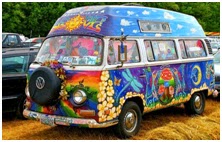
Like the history boys it was now our turn to tell our stories, what had we made of the dreams and plans we discussed whilst drinking beer listening to Bob Dylan and the Beatles, penniless idealistic students in a back storey student garret forty odd years ago? Looking back the sixties and early seventies were crazy years; we lived through a counter revolution in social norms about clothing, music, drugs, dress, sexuality, formalities, and schooling, and the relaxation of social taboos especially relating to racism and sexism. The “Hippy” flower power years saw the anti Vietnam movement, Dr Zhivago, Lawrence of Arabia, Apollo 11, a Labour government, the deaths of Kennedy and Martin Luther King, a cultural revolution in China, Simon and Garfunkel, the construction of the Berlin Wall, and in Africa where Russ and I worked with VSO a time of radical political and social change as 32 countries gained independence from their European colonial rulers.

Undoubtedly the changing cultural norms of our society influenced our thinking – so did our Christian family background. Both Russ and I came from non-conformist families – (Russ’s brother the late Revd. Sion Thomas was a Welsh Congregational Minister in the Swansea District). During our conversations it transpired that Russ had stayed with the Welsh Office throughout his career, responsible for promoting Welsh interests in the environment, education and the arts then later preparing for the transfer of powers to the National Assembly of Wales. At the top of his career he had become a private secretary to the Secretary of State for Wales John Morris (1974-79), now Barron Morris of Aberavon, Lord Lieutenant of Dyfed and Knight of the Order of the Garter (2003).

In one of George Eliot's lesser-known novels, Felix Holt, we are given a stirring and enigmatic line: "Those old stories of visions and dreams guiding men have their truth: We are saved by making the future present to ourselves." Russ and I now have grandchildren, I wonder how I can convey to them something of the great debt we owe to our parents, grandparents, inspiring politicians, activists, the lovers and dreamers, musicians and artists that shaped our lives. For Russ it was the safeguarding of a Welsh way of life, its culture, identity and language that inflamed his heart with passion. For me as a post war baby it was a dream to shape the way our cities, towns, villages and countryside are developed and built, helping to regenerate socially-deprived areas and creating new jobs. Both of us in our own way would see this as building up the Kingdom of God.

I left Cardiff and Russ with a song in my head which my Newcastle based choir, Inspiration sing from time to time – from Munchener Freiheit’s 1988 album (a German pop and rock band) Fantasy:-
The hopes we had were much too high;
Way out of reach, but we have to try.
The game will never be over,
Because we're keeping the dream alive.

And I would like to think that some of the dreams we had as students all those years ago have, by God’s grace, come to fulfilment in our separate lives.


Ray Anglesea
Sabbatical Blog 7:  42 years: Cardiff
8th July 2014
                           

Monday, 11 August 2014

Sabbatical Blog 6 - One Baptism: Two Churches

Ray Anglesea shares the next installment of his sabbatical experiences


Holy Trinity Brompton, often referred to as HTB, is an Anglican church in Brompton Road, London. HTB is hidden behind the Brompton Oratory and flanked by museums. Behind it are expensive flats and houses leading up to Hyde Park. Close by is Imperial College, Harrods and the Brompton Hospital. Its congregation is not only from the locality; people come from all over London.

The church consists of four church buildings, HTB Brompton Road, HTB Onslow Square, HTB Queen's Gate and HTB Courtfield Gardens, as well as being the home for Worship Central, St Paul's Theological Centre and the Alpha course (it is where the Alpha course was first developed and is one of the most influential churches in the Church of England). Over 4,000 people regularly attend Sunday worship across the four sites. Because of the size of the congregation it is divided into pastorates, which are small groups of about 20-30 people run by members of the congregation, most of whom are not in full time ministry. They meet fortnightly for prayer, worship, teaching, Bible study, food and fellowship.

St Pauls’ Onslow Square (Grade II Listed, Gothic in style in Kentish Ragstone and designed as an integral part of the Square) is where my son and daughter in law, Jamie and Gemma worship regularly. First opened in 1860 the church was declared redundant in the late 1970’s. With the permission of the Bishop of London HTB Brompton Road planted a congregation; the congregation has now grown to several hundred.

Sunday 29th June was the date set for my granddaughter Gracie’s baptism: morning worship took place in HTB Paul’s Onslow Square, the baptism in HTB Queen’s Gate. My wife and I love going to Onslow Square. The worship is informal, welcoming with an atmosphere of excitement and anticipation, with many young, friendly families, coffee and croissants are on hand at the start of the service, seats available on nave chairs or leather armchairs/couches or a floor cushion if you prefer. The words for the songs and prayers are projected onto a large screen and on numerous TV monitors. (Revd) Nick Lee’s sermon (trained in Cranmer Hall, Durham) was excellent, delivering a witty, sincere, thought provoking and biblically based sermon. And of course the worship was marvellous. It was a Spirit-filled time of rejoicing, praise and worship. The leader of the musical group was superb, sensitively directing the singing, and there was some clapping and arm raising, which was done with feeling and sincerity. The worship blew me away, moving me to tears.

If worship was held with family and friends at Onslow Square, the baptism of my granddaughter took place not far away at HTB Queens Gate (it’s complicated – don’t ask). A whiff of incense greeted us as we walked through the main door of the church. Formerly St Augustine’s Queen's Gate, Kensington, high Anglo-Catholic, the former church began to be administered from Holy Trinity Brompton following an invitation by the Bishop of Kensington in 2010, where Nicky Gumbel was made priest-in-charge. In March 2011, St Augustine's was formally merged into the parish of HTB. St Augustine's Church (Grade II*) was a favourite of Sir John Betjeman. The tall, narrow nave has a lovely west end on Queen's Gate, with alternating bands of brick and stone rising to a double belfry. Designed by the celebrated Victorian church architect William Butterfield, it was completed in 1876; it is a high Gothic masterpiece. Although the exterior is decorative, it is hardly a preparation for the interior. This is an amazing example of polychrome work, worthy of the nearby Natural History Museum. Everything is coloured, using stone, mosaics, tiles and marble: walls, floors - even the pulpit. Geometric patterns frame a series of biblical scenes on the walls and clerestory, leading you towards the spacious and dramatic chancel, and an astonishing gilded reredos.
                 

Widely appreciated as probably the second-best surviving church in London by William Butterfield, St Augustine’s church at Queen’s Gate, Kensington hides a special surprise for 20th century fans. Alterations and re- ordering in the late 1920s and then post- war repairs resulted in some impressive church fittings linked to a movement retrospectively dubbed ‘Back to Baroque.’  The immense reredos and altarpiece, the backdrop and tester for Butterfield’s pulpit, the Stations of the Cross and the Lady Chapel altar and triptych in the north aisle, are all very distinguished interventions by Howard Martin Otho Travers (1886-1948). It is argued that Travers’s fittings of counter-reformation extravagance are “just as worthy of preservation in their own right as Butterfield's work.” Precisely for these reasons, and wearing my synod LBAC hat, the upgrade of the Grade II* building to Grade I should perhaps be considered.

It was a real joy to be present at my granddaughters baptism with family and friends. Jamie and Gemma felt so supported; a beautiful lunch in the church hall followed the service with their (top tier) delicious wedding cake magically turned into a baptismal cake for my beautiful granddaughter. It too was a real joy to be to see how historic and architecturally important Listed Buildings can be adapted to contemporary forms of worship, attracting hundreds of people weekly to hear the gospel preached in an easy going manner, to enjoy a variety of traditional and modern-day liturgical styles whilst pastoral groups engage in numerous programmes of social/inner city outreach. HTB is of course the home of Justin Welby, many influential speakers, sports and TV celebrities, politicians and world statesman and inner city bankers worship there; it is a rich diverse international community, attracted to Jesus Christ and his enduring love message for our times.

The Alpha course has undoubtedly become a global brand of Christian initiation through the energy of Nicky Gumbel and his team and considering its evangelical roots has taken a decided therapeutic and relational turn. Gone is the “get up out of your seats and come to the front” style of crusading popularised by Billy Graham. Gumbel has replaced the big ritual of the old fashioned revivalist rally with something more intimate, homely and personal. On my visits to HTB Onslow Square the worship seems progressive and consumerist, a chance to sample Christianity, and then buy; a church theology that is expressed in its style, not its substance – it is a church very much intra-related to social and cultural values. I feel blessed by worshipping there. I love getting out of my seat. In planning terms so to speak -  I feel Grade II when I arrive - when I leave I know the world, with Jesus Christ, is Grade I.

Ray Anglesea
Sabbatical Blog 6:  One Baptism: Two Churches, Knightsbridge, London.
29th June 2014