Thursday, 12 August 2010

Rowena's Walking, Whitby to Berwick: Week 4

Week 4 and the final week of the Synod Coast walk and the end is in sight.


Day 1 Alnmouth Station to Embleton.

Even with my current heightened level of fitness I came to the realisation that all the way to Seahouses following a train journey to Alnmouth was not going to happen in a day. So with help from the Tourist Board a further dog friendly B&B was found in Embleton so that a more leisurely walk could take place spread over an additional day. This was a good thing as the train was delayed by a good half hour due to a broken down engineering train on the Alnmouth line. The dogs and I walked down the cycle track to the Priory and then down to the beach past the Fountain where a guy was collecting parking money. Then it was up and along the tops to Boulmer for lunch. The yellow bee rescue helicopter was buzzing around and making its presence heard most of the afternoon. This was my first weekend walking day and I was taken aback by how many people were out and about.

The views of the rock formations were wonderful. The dogs loved the freedom of the cliffs although Toby got covered in grass seeds that it will take a number one shave to get rid of. (He is booked in next week!) A local expressed concern about him bringing the seeds back home to the garden – but that has already happened. We rested in Howdiemont Sands a beautiful small bay in which the tide was coming in fast. Then we continued along the cliffs past the Bathing House built for the Grey Victorian family with its pool, past Howick to Craster. Cullernose Point was covered in noisy sea birds.

A drink in a pub overlooking the harbour and then with dogs on leads due to sheep we followed the masses over the grassy track towards Dunstanburgh Castle. This week I seem to have walked across and around golf courses galore. I am amazed they are all as busy as they are. There was a footpath round the back to the road up to Embleton where a good night’s rest in the Dunstanburgh Castle Hotel was had and where I enjoyed a dinner of local kipper pate and lemon sole.


Day 2 Embleton to Seahouses.


This was a leisurely day. It may have been best to get as far as Bamburgh but my planning and internet search for dog friendly accommodation had not turned up many places at all. Along this part of the coast there are many shacks / beach chalets dotted around the dunes, amidst the bracken, for families and people to use as a base for kite boarding and other water sports. It was hard work progressing up and down in the soft sand of the dunes. We wandered past Newton Pool Nature reserve and into the village of old fishing cottages hugging the way down to the sea. Then we saw the glorious coast line around Newton Point, Football Hole and the Snook.


Then it was a long traipse along Beadnell Bay with an incoming tide and seeming miles of sand. Toby wanted to be up on the Dunes so I had a sulking dog in tow. We diverted up stream to use the bridge across Long Nanny, mainly because of the incoming tide. We stayed on the track behind the dunes, through what seemed to be an endless caravan site to Beadnell with its harbour and limestone kilns. I went out on the head land but failed to find the C13th ruins of St Ebba’s Chapel and will need to leave this exploration for another day.


Out of Beadnell we had to follow the road and stopped at a Post Office for sandwiches on a green. I am finding stretches of this part of the coast less inspiring than further South as there is less variety; with its endless beaches of sand and dunes that the footpath often falls in behind so that the sea is not visible. This has surprised me given its reputation as a real beauty spot. I got fed up with the road and dropped down onto the beach which further along meant jumping a channel and then climbing up behind sea defences to follow a track up to the road and back down again to circumvent an old Quarry pond near North Sunderland Point. This was better though than more road walking. The views out to the Farne Islands were good although not entirely clear due to the overcast weather. Then it was afternoon tea time on the main street of Seahouses watching the world go by before walking along the front to tonight’s B&B. All the rooms had a sea view and it was great to keep the curtains open and see the lighting change across the sea and islands with the setting and rising sun and enjoy the brightness of the stars. Once freshened up from the day’s walk I went to the Old Ship Inn where a meal in their beer garden overlooking the sea finished the day off in style.


Day 3: Seahouses to Fenwick.


Today entailed a walk inland in order to get around Budle Bay with its sinking sands and tidal channel. It was a route march along the 3+ miles of sands from outside the hotel door to Bamburgh Castle and beyond. Then it was a climb onto the headland and a walk around Budle Point with excellent views of the bay. The rest of the morning was spent on varied footpaths across golf courses, fields and tracks towards Belford. This meant crossing the main East Coast railway line and passing through the grain driers that were fully operational and whose fans were whirring away. They use vast amounts of electricity. Then it your life in their hands as we crossed the A1. As we came past Warren Mill thunder and lightening moved nearer and waterproofs were only just donned before the heavens opened. This was the first real soaking of the walk. After walking through long grass my socks could be rung out and my boots were soaking wet. In a 45 minute pause in the rain I had lunch in Belford but as I set off again once more the thunder rumbled, the lightening shot through the sky and the dogs hung their heads, cowered and looked pathetic.

Following the footpath out from Belford to Swinhoe Farm we lost the route. We went through cattle in a field who unnerved me by starting to chase us so I did my Crocodile Dundee impersonation and we got through the gap into the next field. A problem – the footpath ran out and there was no way I was going back through the cattle field. So we climbed a gate with barbed wire atop that others had obviously done before us and scrambled up beside a stone wall. This then had to be climbed and the dogs enticed through bracken and encouraged through a fence. We were a good half mile North East of where we needed to be so had to follow a DEFRA path through a wood and then go along a track back to the farm to pick up the North Northumberland Coast path once more. This route seemed to be much more clearly marked going in the other direction. Swinhoe Lakes hosted a swan family and the woods around were heaving with young pheasant just let out of the pens ready for the shooting season. They made the dogs frantic by wandering along in front of us and just out of reach.


By now it was mid afternoon and I was faced with a choice. I could head through the woods to Fenwick bearing in mind my experience of the way-marking of the path so far and also that Henry and others on the St Cuthbert’s pilgrimage, having done it before did not find it easy or alternatively trekking along the cycle track/roads. I dithered but discretion ruled over valour, given the time of day and I headed to Dechant and across to Fenwick along the roads. Here I called my B&B and Bev came and collected me and the dogs and took me to Bowsden. Here I and the dogs were well cared for, with drying facilities, the dogs own beds in the lounge, a bath, soup and sandwiches. It was good to share dog stories as Bev works gun dogs and breeds them. A calm evening reading and a good night’s rest and a prayer and hope for better weather tomorrow followed.


Day 4. Fenwick to Berwick: the final day.
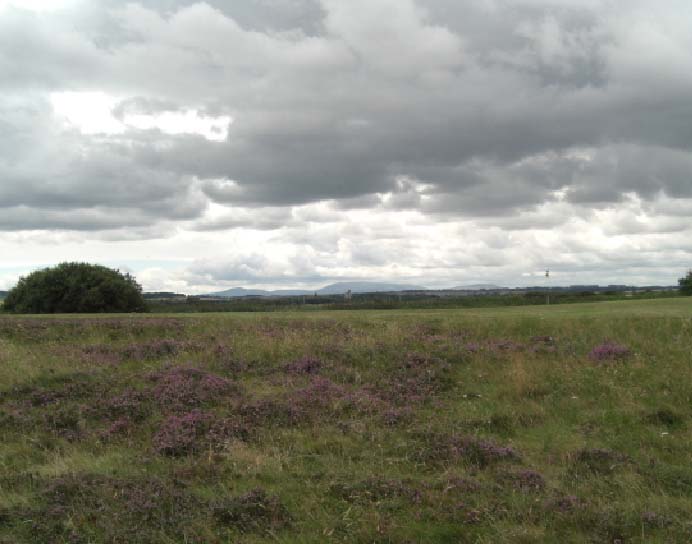

After a leisurely breakfast, with a married couple also staying, when discussion was wide ranging from wind farms, to employment or lack of it and dogs of course, Bev dropped me off to start today’s walk. It was down to the Holy Island Causeway, a route done only two weeks ago and then out along the salt marshes and across the sluice. With its warning notices of being an ex military zone and therefore for folk to be careful of found metal objects that could be explosives. We passed an aggressive swan protecting his family of one cygnet against another adult. The causeway was very busy as the tide was out. Then it was along a track past a stable, campsite and a farm. There were excellent views of the Cheviots and then across another golf course Goswick. I felt I couldn’t cope with a long soft sand walk so stayed on the road but it meant that the sea was not visible.

Then we dropped down to the latter part of Cheswick sands and the wonderful rock formations there. This is the point I normally reach when I walk out from Spittal when I am up there and have the time to walk the dogs so it is a familiar part of the coast. The dogs came off their leads as we wandered along the cliffs between the railway and the sea, the cattle grazing being settled in the fields. Then it was along the promenade in Spittal where we stopped in drizzling rain for me to have some lunch. I was hungry in spite of the cooked breakfast.


We walked along the dock road, the dock and river having numerous swans on it. The railway, old and new bridges were impressive. I walked across the old one as it was easiest to access although guides said it is better to walk the new one enabling better view s of the older one than when you are on it. Then it was up through the town to the station. I would have liked the energy and somewhere to leave the dogs to explore Berwick with its architecture and quaint corners more, but the train home was calling.


It was amazing to be on the train and look out of the window and pass the landmarks of the last few days walking. Then it went inland but it made me realise how far I had walked to think it was a 45 minutes train journey back to Newcastle.


By the time we had walked home over the Town Moor the dogs and I were exhausted. The walk along the coast of the synod has certainly been a challenge and an adventure through which I had been inspired and learned a great deal about the history and context of the coast of the region in all its diversity. I have also been encouraged and impressed with both the dogs and my capacity to do it and to pace it so that it remained enjoyable and not something that had to be done.


I would like to express my thanks to all those who made it possible, those like Henry and Colin who helped with route planning, hosts and drivers like Colin, Patti, Val, Yvonne and Hilga who put up with the imposition of me and dogs and also the tourist board and B&B staff. But I also want to express my deepest thanks to Alan, my husband, whose hope to see more of me during my Sabbatical than normal has not been realised but who I am grateful to for allowing me the freedom to have done this walk as part of it. And to Toby and Molly for their company and for not actually dislocating a shoulder when they headed down a rabbit hole with me on the other end of a lead. Thanks to everyone who made this a good experience and a positive walk to do.


Rowena


Toby

Molly

Monday, 9 August 2010

Rowna's walking, Whitby to Berwick: Week 3

Week 3 of walking from Whitby to Berwick and I am now in my stride and feeling fit having walked St Cuthbert’s Way with a group between this and week two.

Day 1: Monkseaton to North Seaton


The dogs are getting used to the Metro as we walked in over Newcastle Town Moor to the Haymarket and travelled to Monkseaton, walking down to the front to where we left off. This part of the coast is familiar as the dogs and I walk it regularly. We went along the Promenade of Whitley Bay (dogs are banned from the beach in the summer season) to St Mary’s Island. At Seaton Sluice, we stopped for a drink at The King’s Arms. Then it was along the sands and dunes to Blyth with Toby insisting on us walking the dunes so he could chase rabbits and me failing to insist on the beach so that we were nearer the sea.


In order to stay near the coast Blyth was as problematic as Middleborough and entailed coming inland to the main A189 bridge. The journey to that point involved eating doughnuts on the refurbished sea front of Byth, a significant trek along roads past the port and then a riverside walk along the estuary where the number of sea and wader birds was good to see. Then the best way forward seemed to be cycle tracks; along the railway and through Bedlington Station and onto East Sleekburn. The next bit was the most unpleasant part of the walk yet – an on road cycle route that took me a long way round back to the main road. Here the cycle route ran alongside the main road and was not too bad. The day had progressed and unable to find an easy way down to the riverside and North Seaton Colliery I continued up the hill to the roundabout with the road to Ashington and Newbiggin off the main road and phoned my host and chauffeur for the day Yvonne Tracey. A refreshing evening of conversation and good food provided sustenance for the walk ahead.

The resident cat was not sure about the dogs moving into the garage, and the dogs were not sure about the cat. But apart from a bout of barking around midnight and Molly, taking a white to settle all was well.


Day 2: North Seaton to Hadston Visitor Centre

It was good to be joined for this morning walk by Ian and Cynthia Smith from Stockton. Ian has written a book on the Northumbrian Coast amongst others and so it was good to have his expertise and to allow someone else to navigate especially as it was not clear how we might circumvent the power station of the Alcan works in Lynemouth.

Again, this week the weather was clear and dry; ideal for walking. We walked down through Sandy Bay caravan site to the point on the north of the River Font, and then followed the cliffs northward, climbing and crossing the fence of the caravan site at various points due to erosion. In Newbiggin, we admired the sculpture of a couple looking out to sea on the breakwater and the smaller one in the town. We also had coffee and teacakes. We then walked the coastward side of the golf course. The rock formations and sea coal around were fascinating.

We managed to stay coast side of the power station but hit problems when we came to a water way. After deciding against a scramble, and walking around we had to back track and find a way down to the beach. I was glad to have company as alone I would have turned back and walked the long way round by road.

The old slag heaps from the colliery were being cleared and allowed to be washed away into the sea – who knows what this space might be reclaimed for and revitalized as.

As we continued towards Cresswell there were many ponies tethered out, most kept as pets now but some still used to harvest sea coal from the coast. Here we stopped at the ice-cream shop for something to eat and ice-cream of course. Then we parted company and the Smiths caught a bus to family in the area and I continued on my own.

Unrealistically I was aiming to do the length of Durridge Bay to Amble. Walking along the seemingly endless sands, with Toby on a lead so he did not go off the dunes, although soothing and peaceful was also a long jaunt. I came up to the Dunes and let the dogs have their way at the track down from Widdrington and we walked along the cycle track past the nature reserves to the visitor centre. Here I phoned Hilga Peacock who had accepted the imposition of the dogs and I with reticence more about the former than I as moderator. Fortunately, the dogs were well behaved and did as they were told; probably because they had chased so many rabbits, they were exhausted. It was good to be in a home from home and be fed well. I slept like a log as I guess the dogs did too.


Day 3 Hadston Visitor Centre to South Alnmouth.

The dogs continued to enjoy the freedom to chase rabbits as on a beautiful morning we followed the path around the coast, seeing Hadstone Carrs rock formation, followed by Bondi and then Silver Carrs. People had camped on the dunes and in conversation with other dog owners concern about a lost Springer Spaniel believed to have got stuck down a rabbit hole was expressed. Then it was through Low Hauxley and on along the dunes around Pan Point into Amble with spectacular views of Coquet Island.

In Amble I spent some time looking at the piers with people fishing on them, watched as a puffin tour left, had coffee and cake, and visited the town square with its sundial and the marina. Then it was up the road to Warkworth.

It was good not to be pushed for time having given myself an extra day so I walked up river beyond the castle to the Hermitage whose history is unclear. The ferryman rowing people over welcomed the dogs and so they had their first experience of being on a boat. The hermitage consisting of a chapel, confessional and dormitory carried an ethos of peace and calm. Then it was back for a picnic on the river bank.

I took time to explore Warkworth and St Lawrence’s before following the river to cross the Norman Bridge. Then it was up the lane to the golf course and along the beach – yet another part of the coast the dogs and I have done several times. Again, they would have preferred to be up on the dunes and I wanted to be on the beach. This time I won by imposing a lead. The sound of sea and bird cries led to a great sense of peace. As we approached the mouth of the River Aln, we went up onto the dunes and took the track up to the main road so that Hilga could easily pick us up and host us for a second night. I am deeply thankful for those who have hosted me and the dogs and made the walk possible.

Day 4: South of Alnmouth to Alnmouth station.

This half day took us along a cycle track near the River Aln to the road bridge over it and back down Lovers Lane on the other side with good views of Church Hill that a storm had separated off from the rest of the town a long time ago. Here we observed the town and sea from a viewing point before wandering up the main street to the Friary. Then it was round the back and up the hill to the Trig point before dropping down to the river along an overgrown footpath. I followed the river round to Lesbury where I met someone going for a bus who directed me over the old bridge with its modern counterpart right next to it, up Curly lane to the railway station. Here I had a picnic lunch before the journey home.

There is only one more week of walking to go when I hope to complete Alnmouth to Berwick. I am amazed at the sense of achievement and surprised that I have not found it more difficult physically. The coast of the synod is diverse and beautiful but some might say the best is still to come.


Rowena Francis

Monday, 2 August 2010

St Cuthbert’s Way: Northern Synod Pilgrimage 2010

On Monday 26th July nine intrepid pilgrims set out from Melrose led physically by Henry Gowland, spiritually by David Herbert and Rowena and rescued and chauffeured by John Durell on a white steed with a flashing orange light atop; that is a minibus.

The first day from Melrose to Maxton took us around the contours of the Melrose Hills to Bowden. Here we were privileged to be joined by Mary Low who wrote one of the main guides on the Way. Two or three times a day we stopped to share a ‘Mary Low’ moment and hear stories of the places and the people who dwelt where we were walking over the centuries. It was good to hear Mary share with us direct the story of Lady Grisell Baillie. As we later crossed the chain bridge that she had ensured was built to save the people walking miles around to cross the river the significance of the bridge came alive. My fellow pilgrims realising that some of us were unsure of this bridge insisted on swaying it – the big boys that they are!

We walked along the Tweed with beautiful views of sand martins, herons and the sound of the water to pass the Crystal Well. Water from this was pumped up to Benrig House in the 1800’s. It was good to sit and reflect here. We past Mertoun Bridge and then up past Maxton Church, that we never managed to see inside, to where our chauffeur John picked us up and returned us to Melrose youth hostel where most of us stayed for the first two nights.

We feasted sumptuously each night together. This was not an ascetic pilgrimage and it was good to have people join us. Mary Low dropped in with copies of her book. (you can just see her at the far end of this photo)


The second day was from Maxton to Cessford, although as we were a very slow walking group that stopped to look, take breathers, meditate or just came to a stop because we were busy talking, it was gone 7pm before we finished walking. This length of time walking rather than thinking and resting was an issue throughout the week and must have caused headaches for our esteemed physical leader seen waiting for us in the photo.


For much of the morning we followed Dere Street, a Roman Road that predates Cuthbert and that therefore he probably walked along. We stopped at Lilyot’s Cross, there in memory of a maid who kept fighting with gruesome injuries. This has been a gathering place to settle border disputes over the years. We had lunch in Harestones visitor centre. The walk continued through woodland with beautiful views until we crossed the Teviot over a narrow wooden slatted bridge that again pilgrims had to bounce on and sway.

Highlights were the range of flowers all around, buzzards, an aviary with bald eagles and incredible views of the first days of the wheat harvest with combine harvesters and trucks collecting the grain dancing together up and down the field. Tonight’s pub meal was good we had a room to ourselves but it took 30 minutes to work out the bill as we were £30 short until David suggested perhaps it was the bill that was wrong – which it was!


Cessford to Hethpool was scheduled as the longest day but we shortened it slightly due to our slow pace as a group. We climbed, which made us slower but the views were fantastic, onto Wideopen Hill and the highest and half way point of the walk.

It was obvious we were not going to make the pub before it stopped serving lunches so through patchy reception John was texted and met us in a lay-by by the cemetery with sandwiches he had bought . We did not leave anyone behind there. John came to our rescue several times and it was good to have the support of a minibus driver. On most days we turned a corner and found John, having walked a way to meet us, sitting reading – Reformed Theology or the day’s paper. It became a tradition for the boys' dormitory to do the crossword before lights out.

An hour later we had a drink at the Border Hotel that is at the end of the Pennine Way although we didn’t meet anyone finishing it. Yetholm is known as a gypsy village. It was moving to pass through a gate with a signpost marking the boundary between Scotland and England. We dropped down through a wood that was dark and sinister but was incredible as we came down the pine tunnel and saw a doorway of light opening up before us. John drove up the road from Hethpool and picked us up from among a herd of bulls, cows and calves. We would do that part of the walk in the morning. From tonight most of us stayed in Wooler youth hostel, who had us booked in twice which led to a mild panic as it was not realised. A good meal in the Black Bull in Wooler brought the third day of the pilgrimage to an end.


Hethpool to Wooler: Each morning before setting out on the day’s walk we had a time of reflection on the previous day and took to heart a walking text for the day ahead. Today we had 1½ miles to do down the track not done the day before, with John in the minibus leading the way through the herd of cattle including bulls. We walked through the oak trees of Hethpool built for shipping but not matured enough before steel came in. Then we journeyed on through College Valley across the Burn and through a wood that was being actively logged. Some of the equipment was being maintained and it was fascinating to see it close up. We came out on the hillside where there is evidence of old settlements that Cuthbert may well have visited.

The first to spot a wild goat amongst the sheep would win a bar of chocolate. They were spotted by several simultaneously so as a good band of pilgrims the chocolate was shared. We helped a shepherd with his two dogs gather in the sheep. Then we stopped on a high outcrop for lunch with incredible views. All day we kept passing a larger group of Holiday Fellowship ramblers who kept detouring to do a peak and catching up with our tortoise group again. We passed a row of bee hives for heather honey before entering a boggy bit. Our group circumvented it well but one of the Holiday Fellowship group ended up sat in it. We joked about this group being Husband Finders rather than Holiday Fellowship folk. Then we walked along the top able to see for miles around as the weather was kind to us, breezy and fairly clear. Then we went over Wooler Common into the town itself. For the first time we arrived in time to get to a tea shop for an afternoon cuppa.


The evening found us eating in Milan – an Italian restaurant where Val Morrison and her husband Rod joined us as they are visiting in the synod this weekend.


Wooler to Fenwick.
Val and Rod walked with us today as we went
down through Wooler and up onto Weetwood Moor. We came down through high bracken to cross the river Till at Weetwood Bridge. We heard the moving story of the battle of Flodden. We walked a part of the Devil’s Causeway, another Roman Road and speculated about its name. Then had lunch by the river.

Then we climbed up to St Cuthbert’s Cave where a real sense of his presence that had been growing over the week was enhanced. Here we stopped and reflected on St Cuthbert and his life.


Then a real highlight of the Way was to take a slight detour up the ‘Mons Gaudium’ and catch the first glimpse of Lindisfarne. The sun light of the hills we had crossed to reach this point in one direction and the sea in the other was inspirational. Very few photos could do justice to the breadth and splendour of the views. Then through tracks and woods we dropped down in to Fenwick. A final evening meal with additional pilgrims who shared in part of the walk at the Tankerville Arms was enjoyed.

Fenwick to Lindisfarne: Everything was packed and the hostel that had been the home of the land girls following the war was left behind. Val and Rod left us but four other pilgrims joined us on the last day. A gentle walk that involved a treacherous crossing of the A1 and the East Coast railway line took us down to the Causeway across to Lindisfarne. Then it was boots and socks off for most and a good hours walk across the sands. The seals were singing and their voices carried to us. The breeze and sun shimmering on the sands, and the sense of variety having come from hills, river, and wood to sea and sand led to this being a special experience. When we arrived on shore there was warm water and towels for feet to be washed in.


Then it was past the market stall, and the birds of prayer rescue display to St Cuthbert’s centre for a final act of worship and lunch before the pilgrim band said its thanks and dispersed homeward to reflect further on walking St Cuthbert’s Way, the history both natural and social encountered and the life of the Saint and what might be learned for life today from the experience of this pilgrimage.

Rowena Francis

Sunday, 25 July 2010

Rowena' Sabbatical Walk - 2 Seaham to Monkseaton

Week 2 of walking was much easier as I covered far less distance and walked from home using the metro and train to arrive and depart from the three days walking I did. I thought it was about time I spent some time at home with Alan. Again, the weather was fine; although I did pick and choose around a computer crisis and the need for the Synod IT guys to come and examine the system. By the end of the week, I was well over half way to Berwick with less than 80 miles to go.

The remaining 80 miles will be done after a week’s break to walk St Cuthbert’s Way with the synod pilgrimage. In my reading in preparation for this, I have been reading Mary Low who in her book ‘St Cuthbert’s Way’ cites a sermon by George McLeod on prayer preached in July 1955.


'The only way to achieve a sense of God’s presence is to put yourself in the way of him. In our analogy you achieve a sense of life in the presence of a flower (Pluck it and it dies), by a running stream (Put it in a pail and your have H20 not living water), in a bracing wind (bag it and it becomes stagnant) with sunbeams falling on the stream (move a branch and they are gone). You come here to say you have had a perfectly lovely day. It has been a benediction of a day. You can only achieve a sense of God in a similar way. You can only find God in the now.’

This has been my experience on this Sabbatical, that although we hear the stories and know God has been with us in the past and hope God will be with us in the future, we find God in the now. However, this presence of God in the now is not only in the beauty of nature. It is also in the chance encounter with the group of alcoholics who were keen to fuss the dogs, with the older married couple who are pleased to talk to someone and hear about the walk, and all those who went out of their way to give directions when local knowledge was better than maps and signs.

Day 1: Seaham to St Peter’s Metro


This was an easy day’s walking that I started along the beach, but then went up on to the cliff tops before Pincushion Rocks as high tide was late morning and there was a risk of getting stranded. Erosion had led to the cliff path being suspended but many others had continued to walk it and I followed suit. A couple of gills needed traversing. I then went along Hendon Promenade and picked up a disused railway line that took me around the docks to bring me out in Sunderland by Trinity Church (Grade I and now only used for concerts) where Jack Crawford along with 100,000 others are buried. A journey around the quays along a promenade and new housing development with views overlooking the mouth of the Wear brought me round to St Peter’s metro station.

Day 2 St Peter’s Metro to Percy Main Metro

This was the longest day of the walk so far but very rich in its diversity. From St Peter’s metro, I followed the Wear walk around past the university and glass centre and round to the Marina. I would strongly recommend this as a walk – Sunderland does not do itself justice. The sculptures along this route are fascinating ranging from a tree crane, nuts and bolts, remains of workers cottages and a series of story panels done by school children in years 5 and 6.

The first was powerful. It told of how the people had cut down all the trees including a magic one to make ships. The ship made from this special tree sank. So they made another ship out of steel to go and lift it from the sea bed. They put the wreck on the ground and it grew back into more trees including another magic one. This is a profound story of hope from children in a community that has seen industry and development wax and wane.

Then I walked along Roker’s prom and beach (once it became dog friendly in this summer season). Following coffee and teacake at a cafe on the beach side, it was up to the cliffs with views across to Fulwell Windmill; along round Whitburn Bay and then the fire ranges that fortunately were closed and up to Souter Lighthouse. The views across the sea and along the cliffs were great. We continued along Marsden Bay and up to the road to see the old limestone works.

The Leas is a mining area now reclaimed with wonderful walks across it and many wild flowers and good views to the sea birds nesting on the cliffs. I had my picnic lunch at the top of Trow Quarry while Toby and Molly the dogs exhausted themselves in the pursuit of rabbits with no success. Then along the sands of South Shields and Herd Beach that were very impressive for the quality of the beaches. There were lots of young children on days out from school in their base ball caps. Then it was around the promenade of South Tyne to the ferry. One of the things that have struck me on this walk is how I have encountered male culture – on skate board parks, fishing on the docks and in locals.

I had decided not to use the ferry, having done that route along this part of the coast when walking with Christian Aid on the ‘Cut the Carbon’ march a couple of years ago. So I went further inland to the pedestrian and cycle tunnel. This involved 3-4 miles on a cycle route alongside a main road all around the outside of the docks. It was a test of stamina. It was tricky finding the entrance to the tunnel due to the construction work taking place on the road tunnel. Very few people around seemed able to give directions. Eventually I found it. Like the transporter bridge, it was a disappointment. The longest wooden escalators, at the time of construction, had not been working for months and so we had to walk down them. Perhaps this was better from the dog’s perspective. The tunnel itself was actually much shorter than I expected and was nothing compared to underground link tunnels in London. It was busier than I expected especially with cyclists. We got a lift up and out. At least I can now say I have done it. The next day a six million refurbishment scheme was announced. Then it was up the bank to Percy Main metro and the journey home.


Day 3 Percy Main to Monkseaton metro stations

I followed the cycle route down from the station that actually goes all the way to Berwick but which I will not be following all the way. It took me down through a lush green housing development with apartment blocks where the chronically poor are housed. A shrine to a youngster murdered 17 years ago was maintained with football shirt, flowers and cards on the fence. God is here.

Then it was down through Redburn Dene, beautifully landscaped with sculptures from the old hulks of wooden ships and onto the Fish Quay. This is the fish quay of all those I have walked around that I will return to. Its restaurants and sh ops looked appetising and well worth investigating in the absence of dogs. Then I followed the promenade around to North Pier, then around the Priory and enjoyed watching the folk on the beaches as I walked above them on the Promenade. It was good to see Cullercoats in more detail than one can from driving on the road. At the start of Whitley Sands, I cut up to Monkseaton Metro station having had a light day.

Rowena

Friday, 23 July 2010

An Australian Reflection

Australia is a magical land, flush with natural splendour, acres of grapevines, sublime beaches, beautiful wildlife, majestic giant trees, epic distances. It is a prosperous, diverse and multicultural country.

As I travelled around Western Australia at the start of Pentecost 2010, familiar and traditional images associated with the season were to be seen and felt everywhere throughout the Large State - red fiery leaves on Autumnal trees, a gentle breeze which blew over Freemantle’s harbour, a thunder and lightning storm which raged around Busselton Bay, the silence of early morning dawn on Scarborough beach, Perth. Another image of Pentecost which came into my mind whilst on holiday, and which I have been exploring since my return is the Pentecost image of space for as I discovered Australia is a big country, epic distances with large spaces.


Space! Not the final frontier but the area or arena we occupy in our homes, our places of work and in the community. My professional life has been spent arranging and shaping urban and rural spaces in many of the County’s towns and villages. Space also occupies our churches, both inside and out. Over the years many of the Northern Synods listed church buildings and halls have had their internal space modified and altered to fit new worship patterns and community uses.

But why you might ask is space connected to Pentecost? Space is significant for Christians. Orthodox Christians believe that since God’s feet touched the earth following the birth of Jesus in Bethlehem, the earth is considered a sacred and holy space. The Dean of Durham recently writing in “News from Durham Cathedral,” Summer 2010, suggests “that every church is a sacred space, a public sign of God’s presence in the world.”

During the last few weeks, ordination services have been held in churches up and down the land during which ordinands heard the customary and time-honoured lesson from the Old Testament, Isaiah 6. I was reminded at my ordination service that God’s presence is found not just in the sacred places of our churches and cathedrals (verse 1 tells us God’s train filled the temple), but in spaces outside the church where Christ was crucified, in an unfenced and unadorned place, the place where people like myself, self supporting minsters, ply their renewing ministerial craft. For it is in that place, outside the church, in the world, where God’s glory is to be found, as verse 3 from Isaiah 6 reminds us, not in church buildings. The poet Gerald Manley Hopkins affirms in his poem of the same name that “The world is charged with the grandeur of God.” And later he reminds us that “The Holy Spirit over the bent world broods with warm breast and with ah! Bright wings.”

This is where we find God, in the urban spaces around the church, he is around every corner, celebrating in the skill and daring of the kid on the skateboard, encouraged in the neighbourhood’s tenant’s meeting, crying with the abused child of the addict, dancing with the swaying crowds of Pentecostal choirs, saddened by the profligacy of city bankers. I discovered whilst working in Newcastle’s East End you don’t have to look hard to find God in the spaces of our inner city, in our urban areas. There he is in the face of the woman who patiently teaches local children to cook or draw, in a man who talks to hoodies on the bus or street pastors in the midst of the night time economy of the city centre. As Laurie Green stated in the edited book Crossover CityResources for Urban Mission and Transformation, Continuum Press 2010,” glory is to be found in colour and mixity, vibrant money and music making, oppressive selfishness and dirt, chaotic order and summer tennis courts. As St Paul found out after his conversion, God is not always where you expect to find him. The Bishop of New Hampshire, Gene Robinson writing in his book In the eye of the Storm, Canterbury Press 2008, writes “God refuses to be contained in the little boxes of space we create for God to live in, safely confined to the careful boundaries we set for God’s Spirit. God just won’t stay put!”


So here is a new and different approach to consider this Pentecost. How does the work of the spirit affect the spaces which we occupy in our homes, our places of work, our community, our churches. In the large wilderness spaces of my Australian holiday I discovered that the season of Pentecost might be considered as the celebration of God-given space in which we can grow and flourish, where all of us collectively, can discover and live out our humanity.


The origins of Pentecost lie in one of Israel's agricultural festivals, the Feast of Weeks, when the first ripe grain was offered fifty days after the Passover. The feast in Old Testament times was related to the gift of a land, the gift of land or space which was given to the Jews to inhabit, settle and fertilise, a land that was well-watered, productive, as the familiar phrase goes - a land flowing with milk and honey. This land of safety, plenty and rest is a familiar Bible image of deliverance, recovery and liberation. But what is interesting to note about the language of ‘salvation' in Hebrew is that it is closely related to the idea of space, a space in which as individuals and communities we have room to grow, to flourish and be truly alive. The converse of that space is a restricted space, a space that does not lead to potential growth, but a space to be confined, hemmed in, imprisoned, where possibilities are closed off. In that sort of space we die.


Sadly many of our world conflicts have been driven and are still being driven by the acquisition of space, land-hunger, the competitive struggle for territory to occupy. Even in the Old Testament the occupation of land was often a matter of conquer, divide and rule – one tends to forget that there were already people living in the evocative land flowing with milk and honey. The 1984 Nobel Peace laureate, the irrepressible Archbishop Desmond Tutu, shortly to retire later this year, once said “When the missionaries came to Africa they had the Bible and we had the land. They said, “Let us pray.” We closed our eyes. When we opened them, we had the Bible and they had the land.”


In New Testament times the story of Pentecost is closely linked to the mission of the church. At Pentecost the disciples are in Jerusalem where the risen Jesus has told them to wait. But after the rush of wind and fire, they learn that they must take the gospel out of the city's confines. ‘Jerusalem, Judea, Samaria to the uttermost parts of the earth': those are the expanding circles of the gospel's influence that are acted out in the mission of the early church. The Book of Acts begins in Jerusalem and ends in Rome, as if to say: there is a new geography of the Spirit here, a new way of mapping the world. It is space for the gospel to occupy. It is claimed by the risen Jesus in the power of his Spirit. It is God's. So the urban (and rural) space, this contested space, is a good position to learn how to live in God’s bright new world of Spirit filled space, to learn the lesson of the risk of the cross and its promise of resurrection life.


We could say that the Spirit's activity is always the creation of space in which to grow. And we can see that happening in the very first story in the Bible. In the opening verses of Genesis, the spirit or wind of God moves over the face of the waters: the Hebrew word suggests a bird hovering over her nest. It is the beginning of a journey that will see the chaotic flood pushed back into a place from where it can no longer threaten to overwhelm the world. With the waters' boundaries set for ever, space is created for the dry land to appear, and an ordered, coherent universe can begin to teem with life. In Genesis, where the Spirit of God is at work, chaos is driven back, and pattern, order, structure, life and consciousness have room to emerge.


So it is for us this summer, for those who follow the way of Jesus Christ. As Matthew’s beatitudes have it – “Splendid are those who follow the ways of Christ, they too are citizens of a Bright New World” from John Henson, Good as New translation taken from chapter 1 the Reflective Disciple, Roger Walton, Epworth Press 2010. Here is space, Spirit filled space in which the boundless grace of God abounds without end.


This season of Pentecost then opens up a vision of broad, generous spaces we might inhabit as the Spirit makes a home amongst us. The traditional images of the Spirit all imply space: without it fire goes out, water stops flowing, wind ceases to blow. But as the Spirit prompts and propels us into inhabiting our salvation, occupying the space God gives us to grow in, in our homes, our places of work, our communities, are there any limits to what we could become in his service? With this vision the church is poised for new mission filled activities in the world, like the first Christians in the Book of Acts. In Northern Synod the Mission4Life Mission Fund, launched in October 2009 is encouraging and supporting partners in mission initiatives throughout the Synod. Partners already supported include Grindon CRCW, Newcastle City Centre Chaplaincy, North Northumberland Rural Adviser and St. Cuthbert's Centre Holy Island, church communities although small in number now on the cutting edge of mission.


Within our own denomination Vision4Life give us that opportunity to be transformed and renewed from within, galvanised by new reasons for occupying Spirit filled spaces as we live in God’s bright New World. Our society and our world freed from all that holds it in thrall to chaos and death, now begins to embrace the release and hope it longs for. Pentecost is our gateway to vast and generous spaces of an unprecedented experience of God-given life.


Revd Ray Anglesea


July 2010


Ray Anglesea is a self supporting minister in the Northern Synod

Monday, 19 July 2010

Rowena Sabbatical walk - 1 Whitby to Seaham

Week 1 of walking is complete and the dogs are whacked and so home is peaceful as it would take more energy than they have for a day or two to bark at every passer-by.

Over the week I have been reflecting on Proverbs and their exhortation to be disciplined or be a disciple rather than to go of into one’s own folly. Proverbs 16:3 has become an important text as I walk the length of the synod, ‘Commit to the Lord whatever you do and he will establish your plans.’ This is not simply in regard to Sabbatical plans but for future ministry. The plans to walk are to aid reflection for as the saying puts it ‘journeys are the midwives of our thoughts’.

The journey started on Saturday 10th July with the journey to Whitby with dogs on the metro and a car journey from Sunderland after a birthday tea that I was kindly welcomed to. On Sunday I worshipped at Trinity URC led by Revd Helen Drummond who with husband Ian hosted me. This gave opportunity later in the day to go around on the open air bus that Ian acts as tour guide on and to walk a section of the Cleveland Way South. This was a limbering up exercise for the week ahead.


Whitby to Staithes

At 9am on Monday the dogs and I set out along the Cleveland Way coast path to Staithes. It drizzled on and off all day. The tide was out so we went along the beach to Sandsend where after 35 minutes walking I stopped for a cappuccino; who knows when further sustenance would be available. Then up on to the cliffs and along a disused railway to Kettleness, before dropping down once more to the sands. Rabbits were a great attraction for the dogs all week. We traipsed across the sands again to lunch in Runswick Bay near the lifeboat. Then there was a steep climb out of the village to continue along the Cleveland Way to Port Mulgrave, round Old Nab to Staithes. I arrived with plenty of time to wander around the life boat station, the harbour, the co-operative craft fair before arriving with two wet dogs at Brooklyn B&B. Here towels were needed and it was all hands on deck to rub the dogs dry. Later in the evening a meal at ‘The Cod and Lobster’ overlooking the harbour sealed a good day. The pub had been restored in the 50’s following its fourth time of being substantially carried off by the sea. This has happened to whole villages such as Kettleness, on the coast walked today which is one of the stretches that is being eroded at the greatest speed around the UK.

Staithes to Redcar

Stuffed with a generous full English breakfast we were seen off the B&B premises by a flustered herring gull protecting its two young chicks. These were hatched on the roof of the house on the neighbouring street and so found its nest and chicks on a level with the front door steps of the B&B so one was only a metre away at eye level.

The Cleveland Way wound across the cliff tops. This area has been a centre for Alum Quarries. We crossed Rookcliffe the highest point on the North East coast and on this walk. Skinnygrove down in a river access that thrived in the days of the iron and steel works now had the air of a ghost village. This stretch had a rich industrial heritage but was older than what was to come in the next couple of days; symbolised by the Guibal Fan House maintained as an ancient monument now but that was used to ventilate the nearby mine from 1872-1906. Although quiet the villages did not show signs of devastation and destruction of the like of what was to come in later walk days.

This area of geological significance with loads of fossils, one of which I brought home as a treasure, is also marked by a series of sculptures by Richard Farrington, including one called ‘The Charm Bracelet’ that was well worth seeing.

A late lunch in Saltburn was followed by a hike over the sands (that was hard going) to the start of the Southern end of Redcar Promenade and along the front towards Coatham where Colin Offor kindly picked us up and along with wife Patti hosted us over night. It was good to share conversation and to tell dog stories in advance of a new four legged member of their family being adopted the next day.

Redcar to Cowpen Bewley
The next two days walking were the ones that proved most problematic to work out a route for. I am grateful to Henry Gowland for an initial draft route, to Alan my husband for scanning maps, to Ken Harris for inquiries made about the best way round Seal Sands and to Colin Offor for his knowledge of cycle routes north of the Tees. Indeed the route I took proved fascinating and not as difficult as envisaged.

From Coatham I went the long way round the golf course – something I did several times on route rather than face the ire of golfers. I followed the boundary of the steel works and then crossed Coatham Marsh. This led to the most challenging part of the walk for the dogs. A high footbridge across the railway line with gridded metal steps up both sides – not designed for paws either in size or sharpness. With coaxing, lying flat on their bellies I enticed them up; but no way were they going to go down. So they had to be carried in turn.

I now joined the end of the Teesdale way and much of today followed this path. At the Corus roundabout on the A1085 a gaggle of geese had somehow got themselves stranded on the roundabout. Their leader frog-marched them around and then decided they would have to go for it and in single file they strode across the road. A police car gave way and a back log of traffic built up to let them pass unharmed.

Then for five miles it was the’ Black Path’ something I was looking forward to walking as an experience. With pipe lines on one side and railway servicing industry, with freight trains passing up and down on the other; this path is sometimes open and sometimes closed in with fence on either side sometimes being only 2-3 metres wide. Yet in this spitting pipes and hooting, clashing industrial environment, reed beds and wild flowers, brambles and birdsong abound.

I came out at the Navigation Pub for lunch where the locals looked after the dogs with water. Then it was over to the Riverside Stadium where I paid homage on behalf of my brother-in-law and over the dock. The new Temenos sculpture by Anish Kapoor and Cecil Balmond was impressive and a highlight. It was good to see this that only opened in June this year. It is difficult to describe. The best I can do is a big bird net with a twist and aesthetically pleasing.

Then the dogs and I walked up the road to the Transporter bridge for our first experience of crossing it. I was excited but Colin had warned me at breakfast that it was not that special. If truth is told, I was disappointed as there was not a sense of being suspended and the bridge looks more imposing from further afield.
Then it was up the road through Port Clarance and High Clarance revealing the contrast between burnt out and boarded up houses amongst homes and yet green open spaces and trees. These communities tell the story through their presence of the industrial decline on Teesside.

A rest on waste land in Haverton Hill prepared me for a nasty piece of road walking up Cowpen Bewley Road with no verge or pavement and heavy vehicles passing. I should not moan as I thought I might have to do many miles like this rather than only one or two. Then I had a coffee at the pub and wrote up my reflections on the day until Colin was free to pick me up and willingly hosted me for a second night.

Colin and Pattie had collected their new Border Collie adoptee that afternoon so settling her in with my two dogs Toby and Molly as guests in the house led to a wonderful evening of eating and fussing dogs.

Cowpen Bewley to Hartlepool

On Colin’s advice I followed cycle route 14 through Cowpen Country Park and then footpaths into Greatham where there is a Hospital Estate and chapel originally set up for the poor as well as an ancient Parish Church. They were beautiful but not accessible at the time I passed through.

I then used footpaths across fields and alongside the railway, between the oil storage and other works. This brought me down past a chicken battery farm and onto Graythorp Industrial estate. Only a short distance along the main road, that interestingly gave views of the ghost ships in the shipyard, before I turned down the access road to the power station. A short walk across the nature reserve brought me to the North Gare breakwater path that I followed and went out on in spite of the danger signs. As I had not risked going out on South Gare the other side of the Tees, (as it is not encouraged and it would have been a significant detour) I felt it important to see the Tees from this angle. Cruise and container ships were busily entering the docks.

Then we did another extensive beach walk along Seaton Sands to Seaton Carew where I had a very welcome lunch on sheltered decking, as it was a windy day, at the Staincliffe Hotel – a beautiful parsnip and apple soup. Food seems to taste so much more, when walking indeed when on Sabbatical than when working when it so much more functional. Another beach walk to Hartlepool. Here I wandered around the Old Town, Historic Dock and Marina before Val Towler, my host for the next two nights, picked me up. It was good to have time to talk.

Hartlepool to Eastington Colliery

On this day, I spent an interesting hour or more on the Headlands of Hartlepool, the old medieval city having walked out along the main road in the company of an unemployed guy walking his terrier. The fish quays, St Hilda’s church and Andy Capp statue were absorbing but took time out from walking the route.

Durham County Council in the last decade has developed a coastal walk from Crimdon to Seaham Hall Beach. It is beautiful and I would strongly recommend it. While it is well signposted from car parks assuming people will walk to the coast and wander back or at most will do a small circular ramble; it is not well signposted for walkers along the whole route. When crossing a gill it is not clear whether it is best to go down onto the beach and up again or up to the railway and road. I suspect I ended up doing extra miles in and out and so for the first time I did not make my aimed for destination.

This area was a centre of mining. Its villages of Blackhill Colliery, Hordon and Eastington Colliery that at points I walked through showed that history. Val picked me up at Easington Colliery.

Easington Colliery to Seaham

It has been a good week but I and the dogs are tiring. Next week there is space in the walking schedule. So I made the decision to only walk for a half day to Seaham and get the train home.

Much of the route followed the railway or cliffs. At Hawthorn Hive, I went further inland than necessary but the ancient woodland was stunning. Then past Beacon Hill (I did not climb it), and Nose’s Point. If you are into wild flowers then the Magnesian Limestone cliffs in this area are a feast to behold with orchids, ox eye daisies, ferns and gorses. The dogs loved this terrain and its smells. The colours and variety were wonderful.

Then down into Seaham with its harbour and superstore Asda opposite. Then I went up through the main shopping street with its charity shops and cheaper end of the market retailers. There I stopped for lunch at a cafe and watched the world go by before walking to the railway station and catching the 1.15pm back to Newcastle and walking home across the Town Moor.


The first weeks walk has been easier route wise than anticipated and has been very satisfing, enjoyable and fascinating in the variety of landscapes walked through. It is helping me to get a better picture of parts of the synod and is indeed a journey that is a midwife to thoughts. I pray these thoughts will be fruitful and helpful in the months and years to come.


Rowena